




Description
In the age of wearable technology and smart fitness tracking, Strava has established itself as one of the most popular platforms for runners, cyclists, and general fitness enthusiasts worldwide. Known for its social and competitive features, Strava goes beyond simple activity tracking by combining data analytics, community engagement, and goal-driven motivation. This review explores Strava’s features, usability, performance, strengths, limitations, and overall value.
Overview of Strava
Strava is a fitness app designed for tracking outdoor and indoor activities using GPS and wearable integrations. It caters to athletes of all levels, offering detailed insights into performance, training trends, and route analytics. Beyond personal tracking, Strava focuses on building a connected fitness community, allowing users to share activities, challenge themselves, and compete with others globally.
The app is available on Android, iOS, and web platforms, and integrates with most wearable devices and smartwatches.
User Interface and Ease of Use
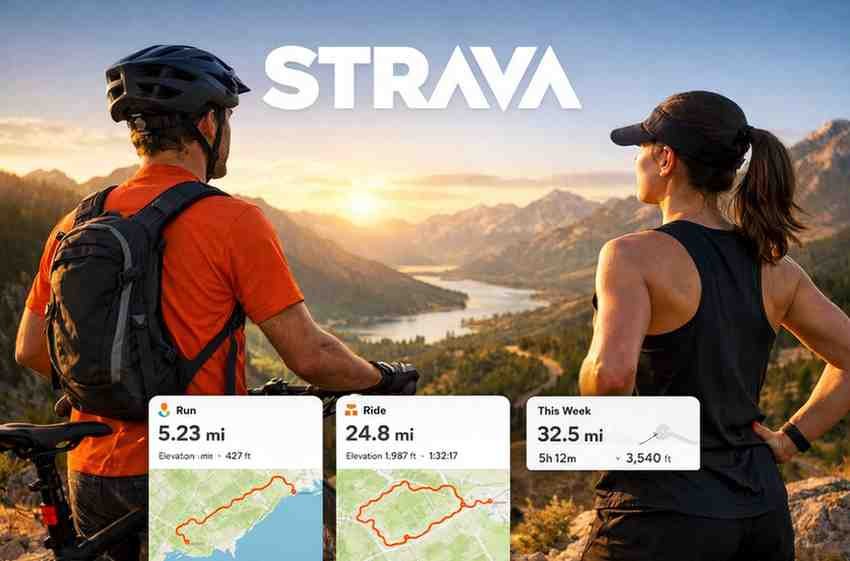
Strava features a clean and intuitive interface. The dashboard allows users to track runs, bike rides, walks, and other workouts with ease. Activity summaries display distance, pace, elevation gain, calories burned, and other metrics in a visually appealing format.
Onboarding is simple: users can quickly set up their profile, connect devices, and start logging activities. For beginners, the interface is straightforward, while advanced users can explore detailed analytics and training plans.
Core Features
GPS Tracking and Activity Logging
Strava tracks a wide range of activities including running, cycling, swimming, hiking, and gym workouts. GPS tracking provides accurate distance, pace, route, and elevation data.
Segments and Leaderboards
Strava’s “segments” feature allows users to compete on specific stretches of routes. Leaderboards encourage friendly competition, motivating users to improve performance over time.
Social Fitness Network
Strava has a strong social component, allowing users to follow friends, like and comment on activities, and join clubs. This fosters accountability and motivation through community engagement.
Challenges and Goals
The app offers monthly challenges, distance targets, and performance milestones to keep users motivated. Completing challenges earns badges, recognition, and personal satisfaction.
Integration with Wearables and Apps
Strava seamlessly connects with GPS watches, smartwatches, heart rate monitors, and cycling sensors. It also integrates with apps like Garmin Connect, Fitbit, and Zwift for centralized tracking.
Advanced Analytics and Training Tools (Premium)
Strava Premium subscription unlocks personalized training plans, heart rate analysis, performance metrics, and recovery insights. This helps athletes optimize training and track long-term progress.
Performance and Reliability
Strava is generally reliable and accurate, even in areas with moderate GPS reception. The app performs smoothly on both mobile and wearable devices, while route mapping and activity syncing are efficient.
Offline tracking is available, though syncing to the cloud requires an internet connection.
Security and Privacy
Strava takes user privacy seriously, offering adjustable visibility settings for activities, location data, and personal metrics. Users can choose to share activities publicly, with friends, or keep them private.
Pricing and Subscription Plans
Strava offers a free version with core features such as activity tracking, social networking, and basic insights. Premium (Strava Summit) plans provide advanced metrics, personalized coaching, and exclusive challenges. The subscription is competitively priced for dedicated athletes seeking deeper analytics and training support.
Pros and Cons of Strava
Pros
-
Accurate GPS tracking for multiple activities
-
Engaging social network and community challenges
-
Segments and leaderboards promote healthy competition
-
Wearable and third-party app integration
-
Free version sufficient for casual users
-
Premium version offers advanced analytics for serious athletes
Cons
-
Premium subscription required for advanced training insights
-
GPS accuracy can be affected by tall buildings or dense forests
-
Social features may overwhelm users seeking simple tracking
-
Battery consumption can be high during long GPS activities
Who Should Use Strava?
Strava is ideal for runners, cyclists, triathletes, and fitness enthusiasts who want more than basic tracking. It is suitable for both casual users seeking motivation and competitive athletes looking for detailed performance analytics and community engagement.
Users looking for minimalistic fitness tracking without social or competitive elements may prefer simpler apps.
Summary
Strava is a feature-rich, reliable, and socially engaging fitness platform that motivates users to achieve their goals while tracking performance accurately. Its combination of GPS tracking, community challenges, and advanced analytics makes it one of the top choices for runners, cyclists, and fitness enthusiasts worldwide.
While advanced features require a premium subscription, the free version provides substantial value for casual users. For anyone seeking a connected, competitive, and motivating fitness experience, Strava remains a top-tier app in the global health and fitness ecosystem.


Reviews
There are no reviews yet.