



Description
In an era where digital tools increasingly supplement everyday health awareness, apps that can offer quick and reasonably reliable health insights are gaining popularity. Ada Health is one of the more widely used AI-powered health-assessment apps that aims to provide users with symptom analysis, health tracking, and preliminary advice on when to seek medical care. In this in-depth review, we examine Ada’s features, usability, reliability, limitations, and overall value.
What is Ada Health?
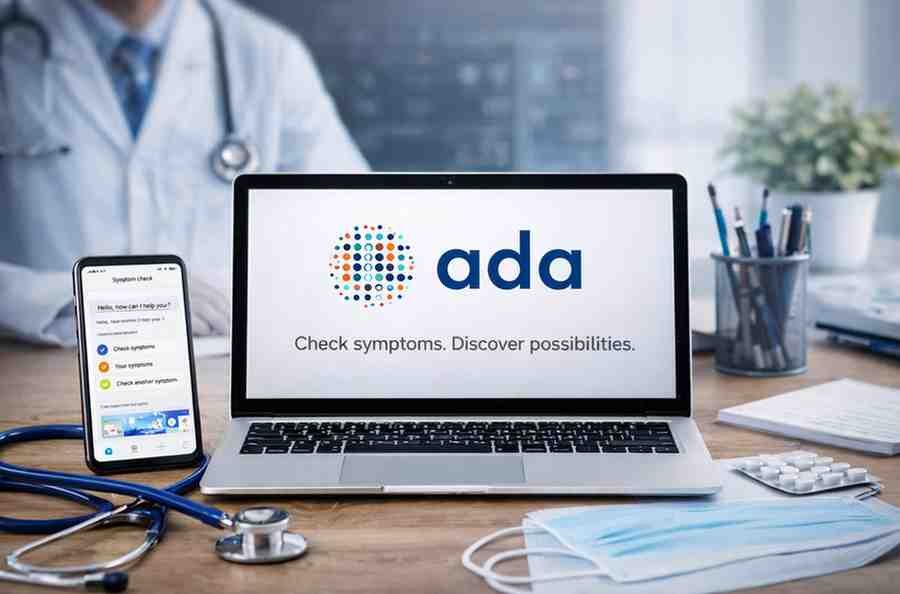
Ada Health is a mobile application designed to help users assess their health symptoms, track ongoing health metrics, and receive guidance on potential conditions or the next steps for care. Rather than acting as a full-fledged diagnostic tool or replacing a doctor, Ada serves as a personal health companion — offering symptom analysis, possible condition matches, and advice on whether to consult a physician. It’s available on Android and iOS and widely used globally.
User Interface & Ease of Use
Ada Health distinguishes itself with a clean, easy-to-navigate interface. From onboarding to using the symptom checker, the app guides users through simple conversational steps — asking questions about symptoms, duration, severity, and context.
For someone experiencing discomfort or unsure about what’s wrong, this conversational, question-and-answer format feels intuitive. The design and workflow are accessible even to users who are not tech-savvy. Because it’s free to use, it lowers the barrier for users to consult when they aren’t sure if a doctor’s visit is needed.
Core Features & Functionality
Here are the main capabilities Ada offers:
-
AI-Powered Symptom Assessment: Users input symptoms, and Ada examines them against a large medical knowledge base to suggest possible conditions and advice on next steps.
-
Health Tracking & Multi-Profile Management: Users can track their health over time, log previous conditions, allergies, medications, and manage records for themselves or dependents.
-
Condition Library & Educational Content: Ada maintains a medical library where users can read about conditions, symptoms, treatment guidelines, and general health information.
-
Guidance & Care Navigation: Based on the assessment, Ada may recommend whether to seek immediate medical attention, schedule a doctor’s visit, or monitor symptoms — giving guidance on what to do next.
-
Accessibility & Convenience: Since it’s app-based and available 24/7, users can use it anytime — even outside clinic hours.
Reliability, Accuracy & Clinical Validation
One of the strongest points in favor of Ada Health is that its symptom assessment engine has undergone peer-reviewed evaluation. It has broad condition coverage and is considered among the most accurate symptom-checker apps in terms of suggesting relevant conditions in its top recommendations.
This makes Ada a relatively reliable tool for preliminary assessments — a “first check” rather than definitive diagnosis. It is important to emphasize that Ada itself recommends using it as a health guide, not as a substitute for a doctor.
Advantages — Where Ada Shines
-
Free and easy to use — accessible to anyone with a smartphone.
-
Broad medical coverage for a wide range of conditions.
-
Quick, 24/7 access, useful outside clinic hours.
-
Good for tracking and documenting health over time.
-
Provides educational resources to understand possible conditions.
-
Clinically evaluated and among the most accurate symptom-checker apps available.
Limitations & Things to Keep in Mind
-
Not a substitute for a doctor — cannot replace professional diagnosis or treatment.
-
Depends on user input quality — incomplete or inaccurate inputs can affect suggestions.
-
No tele-health or remote consultation built-in.
-
Limited explanation depth — provides probabilistic matches and general guidance, not tailored treatment plans.
-
Potential for anxiety — users prone to health anxiety may worry about speculative matches.
Who Should Use Ada Health
Good candidates:
-
Individuals with mild or uncertain symptoms who want to decide whether to monitor or seek care.
-
People in remote areas without immediate access to healthcare.
-
Users looking to maintain a digital health record or track recurring symptoms.
-
Those who want to learn about potential health conditions in a user-friendly way.
Not ideal for:
-
People needing accurate diagnosis for serious or urgent conditions.
-
Users expecting full-fledged remote care, prescriptions, or treatment plans.
-
Individuals who may overreact or experience anxiety from speculative symptom matches.
Final Verdict
Ada Health is one of the most capable AI-powered symptom checker apps available today. It delivers quick, free, and relatively accurate health guidance — making it a valuable first stop when you’re uncertain about symptoms.
Its strengths lie in broad condition coverage, ease of use, a strong medical foundation, and well-designed user experience. However, it must be used as a complement to, not a replacement for, professional medical care.
For anyone aiming to monitor symptoms, track health trends, or get initial guidance before seeing a doctor, Ada Health is a smart, reliable, and user-friendly tool to have on your phone.


Reviews
There are no reviews yet.